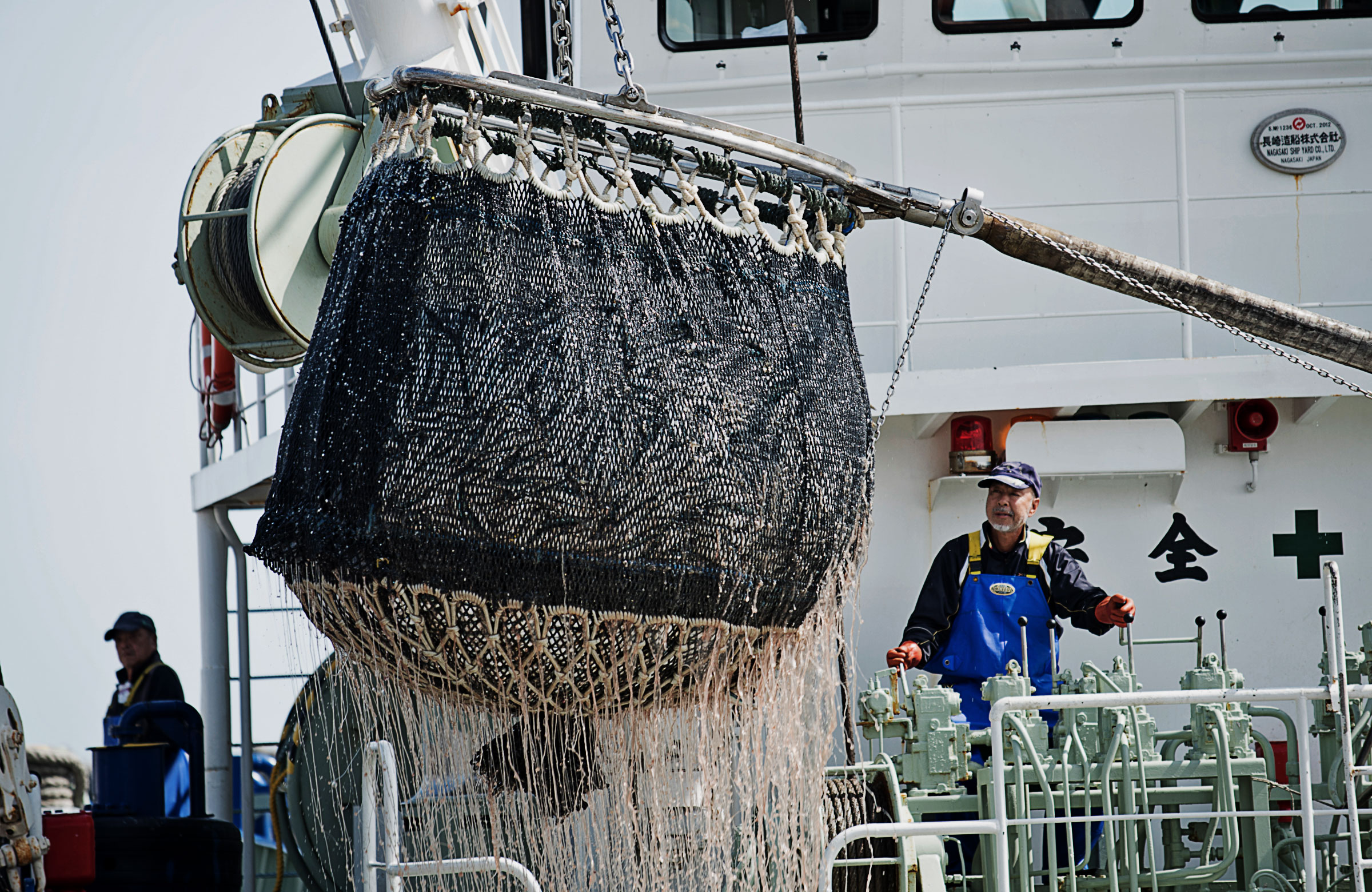
By 2050, the world’s population is expected to reach nearly 10 billion. Alongside that growth, demand for food—including seafood—will rise sharply. Aquaculture is projected to fill much of that gap, providing fish to global markets and local tables alike. But with aquaculture comes a critical question: what about the feed?
At the center of the feed issue is fishmeal, much of it made from wild-caught sardines. If those sardines can be certified as sustainable, it creates the foundation for a traceable aquaculture supply chain—strengthening both seafood security and global competitiveness.
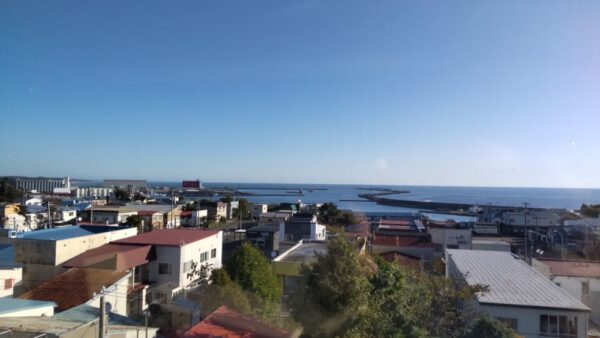
That vision is now taking shape in Hiroo Town, Hokkaido, where a group of industry leaders have launched the Hokkaido Sardine Sustainable Fishery Project. Their goal: achieve MSC (Marine Stewardship Council) certification for Japanese sardines—a first-of-its-kind effort for a domestically managed purse seine fishery targeting fishmeal production.
An Email That Sparked a Bold Idea
The project began in 2022 with a simple email. Hiroaki Kihara, from Kanematsu’s Feed and Grains Division, reached out to UMITO Partners with a question: could Japan’s sardine fisheries pursue MSC certification?
Kihara had spent years working across aquaculture supply chains in Japan, China, and Southeast Asia, even serving several years in Vietnam. Over time, he noticed a divide.
“In Southeast Asia, where farmed fish are produced for export to Europe, certification like ASC is advancing quickly,” Kihara explains. “But in Japan and China, where most farmed fish is consumed domestically, awareness is low and demand for certified feed is limited. Japan is also heavily dependent on imports. If that continues, we’ll fall behind. What we need is domestically produced fishmeal that meets international standards.”
That conviction led him to approach Toichiro Ikeshita, head of Ikeshita Sangyo, a seafood processor based in Hiroo.
“When Kihara came to me with this idea, I thought: we can’t just keep doing what everyone else is doing,” says Ikeshita. “Stocks are uncertain. If we want our sardines to be valued, they must be recognized for their sustainability and shared with the world.”
Through Ikeshita’s outreach, Hamahei Gyogyo, operator of the large purse seiner Hamaheimaru, agreed to join. Together with Kanematsu and UMITO Partners, the four organizations officially launched the project.

Breaking New Ground
Pursuing MSC certification for sardines was uncharted territory. To date, most Japanese fisheries earning MSC recognition have targeted internationally managed species like tuna, or globally traded whitefish like cod. By contrast, this initiative focuses on a domestically managed sardine fishery operating under Japan’s Ministerial Permit system within its Exclusive Economic Zone (EEZ).
“It’s the first time anyone in Japan has attempted to certify a medium- to large-scale purse seine fishery for fishmeal,” says Shunji Murakami, founder of UMITO Partners. “That in itself is a huge step. The fact that it’s already drawn encouragement from the Fisheries Agency shows just how much interest there is in this direction.”
For Murakami, the significance extends beyond sardines. “It signals that Japan can align domestic fisheries with global sustainability frameworks. Many stakeholders have been waiting for this.”
Kihara agrees. “If we can make this a successful example, we can invite others to join us and begin spreading a stronger sustainability culture across Japan. That’s how we ensure our fisheries are globally competitive for the next generation.”
Starting Small, Moving Forward
In Hiroo, there are 24 purse seine vessel groups that land sardines at the port. While some showed interest, few were ready to commit formally at the start.
Recognizing this, the project team decided to begin with a single trusted partner: Hamahei Gyogyo.

“Purse seining often has a bad reputation,” says Ikeshita. “People assume it scoops everything up. And with fishmeal, there’s a perception that freshness doesn’t matter—that it’s just about catching as much as possible. That attitude does still exist in parts of the industry. But we’ve worked with Hamahei for a long time, and they understand what we’re trying to achieve. That’s why we chose to start small and focused.”
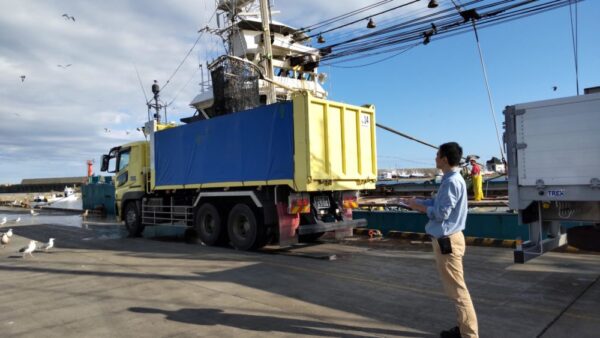
With Hamahei on board, the project began collecting landing data and comparing existing practices with MSC requirements.
Closing the Gaps
Japan’s Ministerial Permit system provides broad oversight for fisheries, but when measured against the MSC Fisheries Standard, gaps emerge. These include limited data on interactions with endangered species, insufficient measures to prevent ghost fishing, and other specific monitoring protocols required by MSC.
To close those gaps, the team must voluntarily gather additional information and, in some cases, adapt fishing practices. UMITO Partners staff now work side by side with fishers at the port, recording data and providing technical guidance.
Mr. Tatsumi of Kanematsu underscores the delicate balance: “We want to ensure the extra requirements don’t place too heavy a burden on fishers. At the same time, certification isn’t possible without their cooperation. Our responsibility is to explain clearly, provide support, and make sure this effort feels achievable.”
A Test Case for Japan’s Future
The project is still young, but its potential impact reaches far beyond Hiroo. If successful, it would establish Japan’s first MSC-certified sardine fishery for fishmeal—strengthening aquaculture feed sustainability and setting a precedent for other domestic fisheries to follow.
Murakami reflects: “This isn’t just about sardines. It’s about proving that Japan’s fisheries can meet global standards and, in doing so, secure a more resilient future for both local communities and the national seafood industry.”
For now, the work continues at the port of Hiroo—recording catches, building trust, and laying the groundwork for a first-of-its-kind certification. But behind each sardine landed is a larger ambition: to show that even a small town in Hokkaido can help lead Japan toward a sustainable future.
Photo: UMITO Partners
Text: Ayako Morioka
English adaptation and editing: Louie Okamoto, with AI-assisted translation
Writer Profiles

Written by: Ayako Morioka
Founder of foodam / FOOD&COMPANY N.E.W.S PROJECT
Originally from Kobe, Hyogo Prefecture, Ayako Morioka studied crop science, specializing in rice cultivation, during her undergraduate and graduate studies. After working in consulting and content production at Recruit Co., Ltd., she joined FOOD&COMPANY—a Tokyo-based grocery store committed to sharing the stories behind Japan’s diverse food cultures and producers—where she served as Communications Director. She now works independently across writing, editing, product development, and other creative projects to highlight the people and places behind Japan’s food systems.