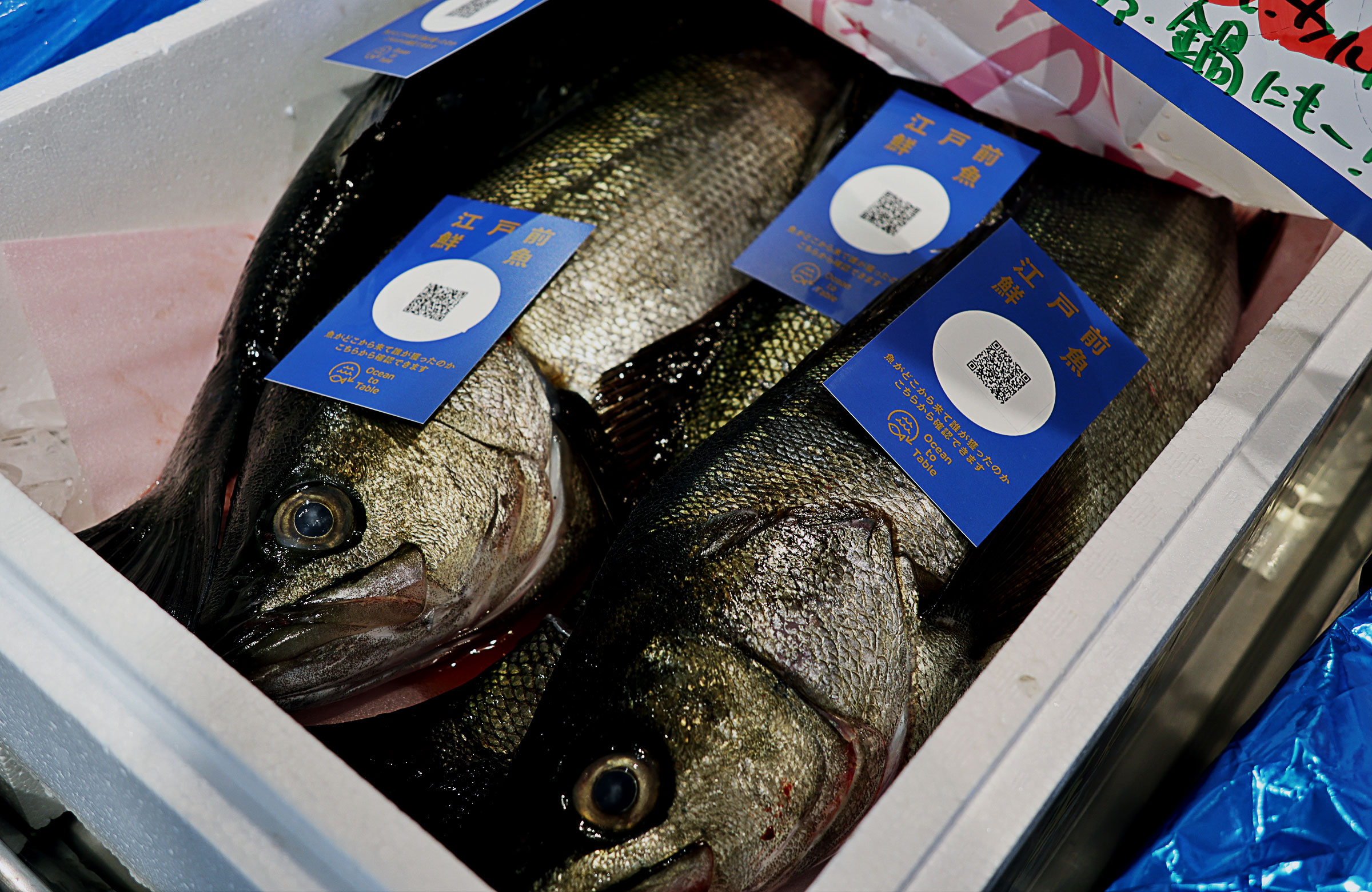
Where does the fish we eat really come from? It’s a simple question, yet in much of the world the answer remains uncertain. Illegal, unreported, and unregulated (IUU) fishing continues to threaten global stocks and ecosystems, fueling overfishing and eroding trust in seafood supply chains.
One of the most effective ways to counter IUU fishing is traceability—creating transparency across every step, from ocean to plate. That idea lies at the heart of Ocean to Table (O2T), a collaborative initiative launched in 2020 by UMITO Partners together with Funabashi-based fishing vessels Daidenmaru and Nakasenmaru, and seafood wholesaler Kaiko Bussan.
O2T is Japan’s first seafood traceability initiative to leverage blockchain technology, offering consumers a direct line of sight into when, where, and by whom their fish was caught.
Ocean to Table: Building Trust Through Technology
Compared to agriculture—where “meet the farmer” labels are now common—seafood traceability in Japan is rare. Supply chains are long, complex, and often opaque, with fish changing hands multiple times before reaching a consumer. O2T was designed to change that.
At its core, the project uses blockchain to stabilize fishers’ incomes, add value to local seafood, and support resource management. Unlike centralized databases, blockchain is decentralized—every stakeholder has access to the same records, making it nearly impossible to falsify or alter data.
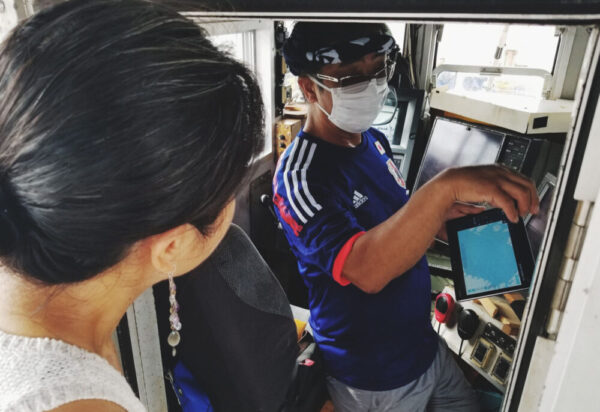
“We record daily catch information on tablets as part of our sustainable fishery work,” explains Kazuhiko Ohno, president of Kaiko Bussan and long-time chief fisherman of Daidenmaru. “In the past, people could falsify not only numbers, but even the origin of the fish. With blockchain, everyone sees the same data. That makes it harder to manipulate—and easier to trust.”
The idea gained momentum when IBM, known for its blockchain-based IBM Food Trust system, approached UMITO Partners about applying the technology to fisheries. That led to the creation of O2T, with support from both tech partners and local fishing families.
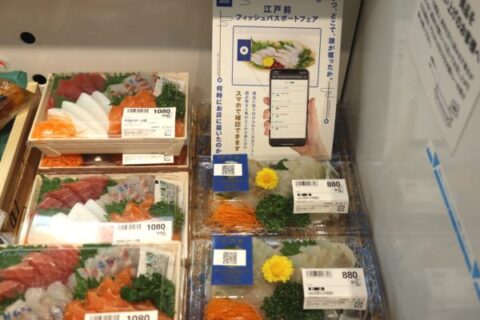
Every fish is now assigned a QR code, branded as the “Edomae Fish Passport.” Consumers can scan it to trace exactly when and where the fish was caught, and how it made its way to market. Sometimes, Ohno and his crew even sell the fish directly at retail counters, telling the story face-to-face.
The Challenges of Traceability
But implementing traceability in Japan’s fisheries has not been easy.
Ryo Yugeta, fourth-generation successor of Daidenmaru, points out that Japan’s diverse fisheries complicate things. “Fish often have different names depending on size or region, and methods vary widely. Standardizing data is tough.”
By contrast, systems in countries like the U.S. are simpler to apply—fewer target species, more uniform practices, and stronger consumer demand for transparency.
Here, the burden falls mainly on fishers. “Passing the costs on to consumers is risky,” notes Akihiro Nakamura, next-generation leader of Nakasenmaru. “Seafood demand is already fragile. It’s hard to imagine traceability scaling under these conditions.”
Still, both Yugeta and Nakamura insist it’s worth pursuing. “People care about freshness and taste, but they also want to trust where their fish comes from,” Yugeta says. “That connection matters.”
Beyond Technology: Storytelling and Product Development
For Ohno, traceability is not only about data—it’s about telling a story.
“People talk about declining fish stocks, but Tokyo Bay still has rich resources,” he says. “We want more people to discover that, and to want to try fish from Funabashi. Traceability helps, but so does product development.”
Kaiko Bussan has begun processing underutilized local species such as konoshiro (gizzard shad), creating new products that highlight seasonal variety and reduce waste. By linking traceability with innovation, the team hopes to create stronger market value for local fish.
Nakamura has noticed the cultural shift. “At first, people questioned why we were doing this. But initiatives like O2T have changed mindsets—not just ours, but others in the industry too. Retailers involved in the project now share their experiences at conferences, and fishers in other regions are starting to pay attention.”

A Long-Term Path Toward Transparency
Ocean to Table is just one step on a longer journey. Achieving traceability across Japan’s seafood sector will require sustained effort, new partnerships, and a willingness to rethink traditional systems.
For now, though, Funabashi’s fishers are proving what’s possible. By combining blockchain technology with local pride and storytelling, they are showing how trust can be rebuilt between ocean, market, and consumer.

As Ohno reflects, “It’s no longer enough to just land fish and send them off. We need to explain who we are, how we fish, and why it matters. That’s how we connect people back to the ocean—and that’s how we create a truly sustainable food system.”
Photos: UMITO Partners
Text: Ayako Morioka
English adaptation and editing: Louie Okamoto, with AI-assisted translation
Writer Profiles

Written by: Ayako Morioka
Founder of foodam / FOOD&COMPANY N.E.W.S PROJECT
Originally from Kobe, Hyogo Prefecture, Ayako Morioka studied crop science, specializing in rice cultivation, during her undergraduate and graduate studies. After working in consulting and content production at Recruit Co., Ltd., she joined FOOD&COMPANY—a Tokyo-based grocery store committed to sharing the stories behind Japan’s diverse food cultures and producers—where she served as Communications Director. She now works independently across writing, editing, product development, and other creative projects to highlight the people and places behind Japan’s food systems.